
The Lincoln Center Art Gallery may be nearing its 50th year, but you would never guess it. Originally a set of three small galleries, The Lincoln Center Art Gallery was transformed into the two gallery spaces you see now after the Center was remodeled in 2011.
While not all theaters around the country boast an art gallery, The Lincoln Center was driven by a citizen initiative that understood how art and culture contribute to the community. Designed as part of the venue, the art gallery fulfilled a promise to the future that the community would always have new and interesting art exhibits free and accessible to the public.
The Lincoln Center Art Gallery continues this legacy by focusing on two different types of exhibits each year: 1) showcases of local and national artists, 2) a curation of national exhibits that exemplify current topics and thought-provoking themes. Exhibits at The Lincoln Center Art Gallery are completely unique. Know that when you walk through our galleries, it’s an experience that will not be replicated.
The best part is that tickets aren’t required to experience the ever-changing exhibits because the art gallery is free to the public during specific times when The Lincoln Center is open. How do we choose the art we present? To encourage a broad range of artwork, we develop our exhibits from artist portfolio submissions, or we have guest jurors select artwork and prizes for an exhibit.
Artist Submission
The Lincoln Center Art Gallery puts out calls on CallforEntry.org inviting artists to submit their work. Sometimes the we will find themes among the submissions and weave those threads into a rich tapestry of different viewpoints and mediums. Sometimes we will choose one artist that has an interesting vision. Whatever it is, we feature both up-and-coming and established professional artists.
By Jury
Through networks that we have grown over the nearly five decades, we choose experts in different specialized fields to jury our recuring exhibits. Sometimes this person is nationally recognized, sometimes they are local. By changing who juries the entries for these shows, it makes each iteration of these exhibits, like the Contemporary Art Survey for example, new and exciting.
Once the artwork is selected, you may be curious how we change the gallery.
Most art galleries take up to a month to turn over their exhibit spaces, but at The Lincoln Center, we typically change our exhibits in a week. Depending on the size of the exhibit, it can take three to six gallery staff to make that turnaround happen.
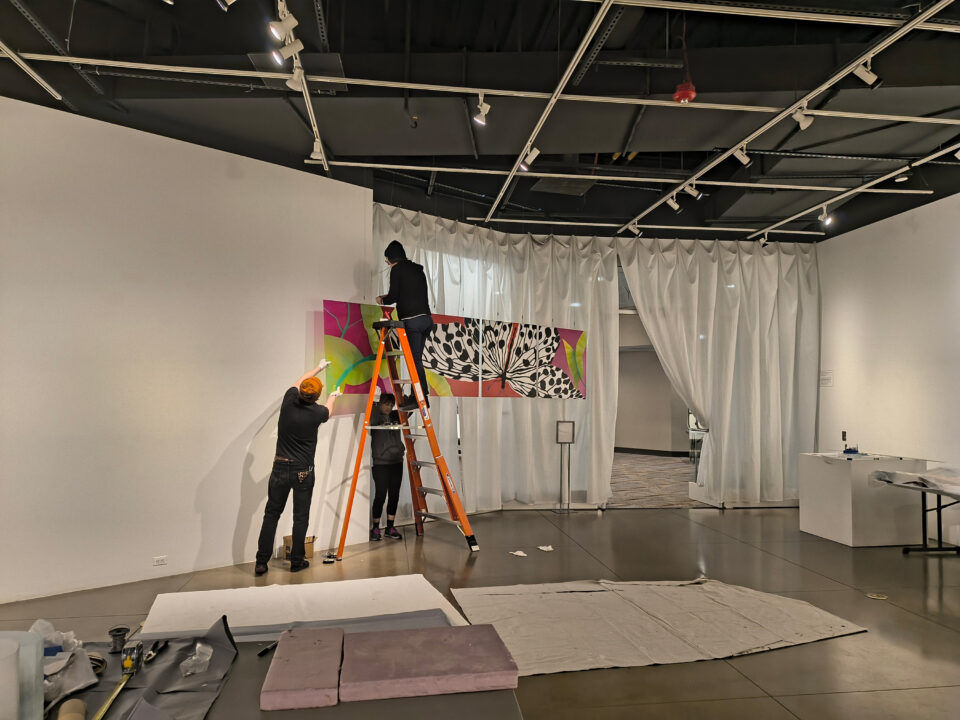
Why the short timeline? The Lincoln Center is always bustling with activity from performances to special events, and we want to make sure that there is always something fresh and unique the next time a patron drops in. The Lincoln Center also has a performance most nights of the year, so the faster we can get the next exhibit in place, the more people will be able to enjoy the art.
However, not just anyone can make these changes. Our art gallery staff comes from a variety of backgrounds, some are art or museum studies students, some are artistic stagehands, and others are professional artists, though all gallery staff members possess the learned skill of handling art.
Once the artwork is chosen and the previous exhibit is taken down, there is still more work left to do before the gallery can be revealed to the public.
How we display art in the art gallery is almost as important as the art we want to display. There are many different theories on how to set up galleries. Exhibits can be designed to complement aesthetics, match patterns, or balance size. Alternatively, pieces can be set in contrast or in a way that may provoke conversation. The flow of people through the gallery is a key consideration in how exhibits are set up. The location, spacing, and order that the artwork is displayed is a way to communicate with the viewers. For the art gallery staff, flexibility is key. Plans and reality don’t always match, so they also need to be able to think on their feet. Because art selection is usually done through photographs, this means that they may change their design after seeing the artwork in person.
The time of year can also play a role in exhibit selection. For example, with the host of family performances that take place on The Lincoln Center’s stages during November and December, exhibits around this time are deliberately chosen to be bright and colorful.
No matter what the decision, a few things remain consistent across all our exhibits: math and a lot of measuring. Oh, and a lot of documenting.
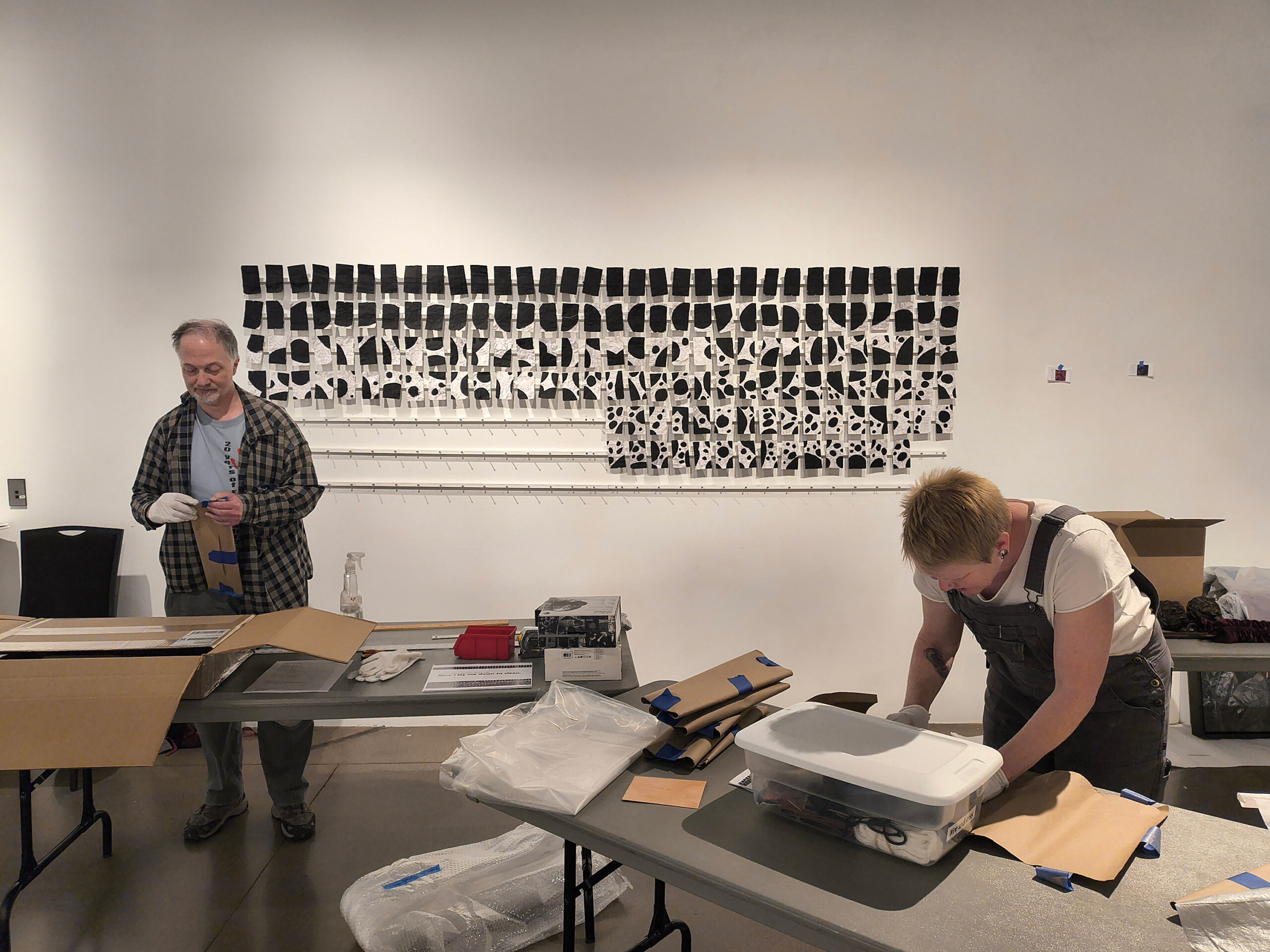
Most artwork is shipped to us, and even our usual carriers know there are certain times of the year to expect a lot of packages. Finding a place to store all the packages while they are processed can also be a real jigsaw puzzle. Once we receive the shipped art, we have to note exactly how it was packed and the condition of the item. If a quilt is folded in a specific way, we record the way that it was folded to make sure we send it back exactly the way it came. This process exists for a few reasons, but the most important is that artists know best how their art should be handled and protected, so it’s best to follow their lead.
This process goes on behind the scenes every day at The Lincoln Center. Often, we are working on multiple exhibits at the same time. We hope you enjoy what you see in our galleries and can’t wait for you to see what we have coming up next!